Previous
Next
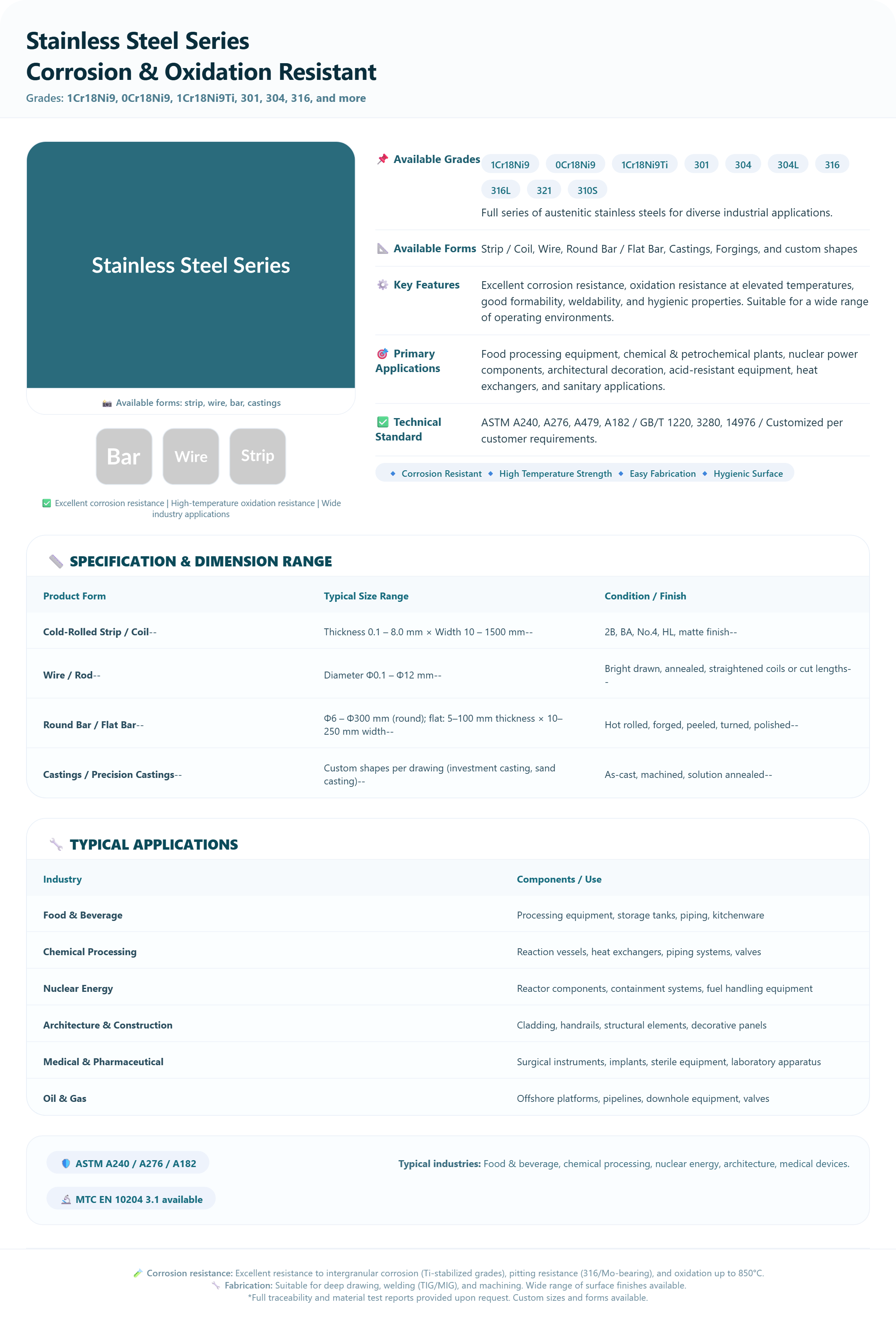
Corrosion Resistant Stainless Steel 304, 316, 321 & 310S | ASTM/GB/T
Description
Corrosion Resistant Stainless Steel 304, 316, 321 & 310S
ASTM / GB/T Compliant Stainless Steel Materials for Industrial, Chemical, Energy, Food Processing and High-Temperature Applications
Hefei Ke Ningman New Energy Materials Technology Co., Ltd. supplies corrosion resistant stainless steel grades including 304, 316, 321 and 310S stainless steel for industrial and engineering applications.
Our stainless steel materials are available in different product forms and customized dimensions according to project requirements. Depending on the selected grade, the materials provide excellent resistance to corrosion, oxidation, heat, chemicals and demanding service environments.
We support bulk orders, custom specifications, OEM processing and material documentation, including applicable material test reports and quality certificates.
Request Stainless Steel Material Specifications & Quote
Stainless Steel Grades We Supply
| Stainless Steel Grade | Key Properties | Typical Applications |
|---|---|---|
| 304 Stainless Steel | Excellent general corrosion resistance, good formability and weldability | Food processing, chemical equipment, construction, kitchen equipment |
| 316 Stainless Steel | Enhanced corrosion resistance, particularly in chloride-containing environments | Marine equipment, chemical processing, pharmaceutical equipment, coastal applications |
| 321 Stainless Steel | Good resistance to intergranular corrosion and elevated-temperature service | Heat exchangers, aerospace components, chemical equipment, high-temperature systems |
| 310S Stainless Steel | High-temperature strength and oxidation resistance | Furnaces, heat treatment equipment, boilers, high-temperature industrial equipment |
Choosing the correct stainless steel grade depends on the operating temperature, chemical environment, chloride exposure, mechanical requirements, fabrication method and applicable material standard.
Why Choose Our Corrosion Resistant Stainless Steel?
1. Excellent Corrosion Resistance
Our stainless steel grades are designed for applications where resistance to moisture, atmospheric exposure, chemicals, salt and other corrosive environments is important.
The chromium-containing surface forms a passive protective layer that helps reduce corrosion under appropriate service conditions.
For more aggressive environments, 316 stainless steel can be considered where improved resistance to chloride-containing conditions is required.
2. Oxidation and High-Temperature Resistance
For elevated-temperature applications, stainless steel selection becomes particularly important.
321 and 310S stainless steel are suitable options for applications requiring greater resistance to oxidation and high-temperature service than standard 304 stainless steel.
The appropriate grade should be selected according to actual operating temperature, atmosphere, thermal cycling and mechanical requirements.
3. Multiple Stainless Steel Grades
Instead of using one stainless steel grade for every application, we provide several common austenitic stainless steel grades:
304 stainless steel
316 stainless steel
321 stainless steel
310S stainless steel
This allows engineers and procurement teams to select a material based on corrosion resistance, temperature requirements, fabrication performance and cost.
4. ASTM and GB/T Standards
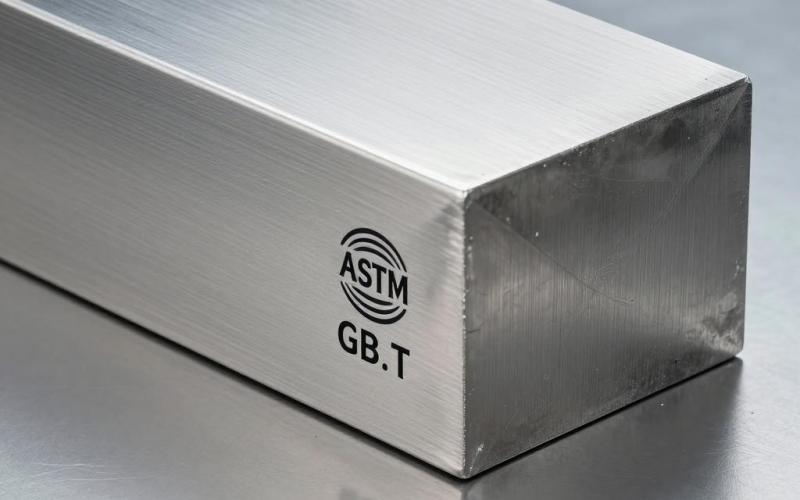
Our stainless steel materials can be supplied according to applicable international and Chinese standards, including ASTM and GB/T specifications, depending on the material grade and product form.
Material documentation can be provided according to the order requirements.
For engineering projects, buyers should confirm the required:
Material grade
Product form
Standard
Thickness or diameter
Mechanical properties
Chemical composition
Surface finish
Heat treatment condition
Inspection requirements
5. Custom Sizes and OEM Processing
We support customized stainless steel material requirements for industrial projects.
Depending on the product form, available customization may include:
Custom thickness
Custom width
Custom length
Custom diameter
Surface treatment
Cutting
Forming
Welding
Machining
OEM processing
Please provide your drawings, specifications or technical requirements when requesting a quotation.
304 vs 316 vs 321 vs 310S Stainless Steel
Selecting stainless steel based only on price can result in premature corrosion, deformation or reduced service life.
| Grade | Corrosion Resistance | High-Temperature Performance | Chloride Resistance | Weldability | Typical Use |
| 304 | Excellent | Good | Moderate | Excellent | Food, construction, general industrial |
| 316 | Excellent | Good | Better than 304 | Excellent | Marine, chemical, pharmaceutical |
| 321 | Excellent | Very Good | Moderate | Good | Heat exchangers, aerospace, high-temperature equipment |
| 310S | Good | Excellent | Moderate | Good | Furnaces, heat treatment, high-temperature equipment |
Important: Actual performance depends on chemical composition, product condition, environment, temperature, fabrication and applicable standards. Material selection should therefore be based on the actual operating conditions rather than grade name alone.
Depending on your project requirements, stainless steel materials can be supplied in different forms, including:
Stainless Steel Sheet
Suitable for fabrication, equipment housings, panels, tanks and general industrial applications.
Stainless Steel Plate
Designed for heavier-duty industrial structures, pressure-related equipment and fabricated components.
Stainless Steel Pipe & Tube
Used for fluid transportation, process systems, chemical equipment and industrial piping applications.
Stainless Steel Bar & Rod
Suitable for machining, shafts, fasteners, structural components and industrial parts.
Custom Stainless Steel Components
Custom processing can be discussed according to engineering drawings, dimensions and technical specifications.
Stainless Steel Applications
Our corrosion resistant stainless steel materials can be used in a wide range of industries.
Chemical Processing
Stainless steel is widely used for tanks, pipelines, vessels and process equipment where corrosion resistance is required.
Food & Beverage Processing
304 stainless steel is commonly selected for hygienic equipment, processing machinery, storage tanks and food-contact applications where the applicable regulations and specifications are met.
Marine & Coastal Equipment
316 stainless steel may be preferred for applications exposed to chloride-containing environments because of its improved resistance compared with 304 in many such conditions.
Energy & Power Equipment
321 and 310S stainless steel can be considered for components exposed to elevated temperatures and oxidation.
Pharmaceutical Equipment
Stainless steel offers a smooth, cleanable surface and corrosion resistance for suitable processing and storage equipment.
Construction & Engineering
Stainless steel sheets, plates, tubes, bars and fabricated components are used for structural, architectural and industrial applications.
Stainless Steel Quality Control
For industrial material procurement, chemical composition and mechanical properties should be verified against the applicable specification.
Our quality control process can include:
Raw Material Inspection → Chemical Composition Verification → Dimensional Inspection → Surface Inspection → Mechanical Property Testing → Final Quality Inspection → Documentation
Depending on the order requirements, customers can request applicable quality documentation such as:
Material Test Report (MTR)
Chemical composition report
Mechanical test results
Dimensional inspection report
Quality certificate
Applicable standard documentation
For critical engineering applications, buyers should specify inspection requirements before production.
How to Select the Right Stainless Steel Grade
Before purchasing stainless steel, consider these six factors:
1. Operating Environment
Is the material exposed to fresh water, salt spray, chlorides, acids, alkalis, chemicals or outdoor weather?
2. Operating Temperature
For elevated-temperature applications, consider 321 or 310S where appropriate.
3. Corrosion Requirements
For general corrosion resistance, 304 is often a practical starting point. For chloride-containing environments, 316 may be more suitable.
4. Fabrication Requirements
Consider cutting, bending, stamping, welding and machining requirements before selecting the grade.
5. Material Standard
Confirm whether your project requires ASTM, GB/T, JIS, EN or another material specification.
6. Total Cost
The lowest material price does not necessarily produce the lowest project cost. Grade selection should consider service life, maintenance, fabrication and replacement costs.
Stainless Steel Supplier for Industrial Applications
Hefei Ke Ningman New Energy Materials Technology Co., Ltd. provides stainless steel materials for international industrial customers.
Our services include:
Stainless steel material supply
Bulk orders
Custom sizes
OEM processing
Material documentation
Technical specification support
Quality inspection
International order fulfillment
Whether you need 304 stainless steel, 316 stainless steel, 321 stainless steel or 310S stainless steel, our team can help match the material grade and specification to your application.
Send us your required grade, dimensions, quantity and applicable standard to receive a quotation.
Frequently Asked Questions
What is corrosion resistant stainless steel?
Corrosion resistant stainless steel is stainless steel designed to resist corrosion under specific environmental conditions. Chromium in stainless steel helps form a passive surface layer that provides corrosion protection.
What is the difference between 304 and 316 stainless steel?
304 provides excellent general-purpose corrosion resistance and is widely used in food, construction and industrial applications. 316 contains molybdenum and generally provides improved resistance in many chloride-containing environments.
Is 321 stainless steel suitable for high-temperature applications?
321 stainless steel is designed for applications where resistance to intergranular corrosion after exposure to elevated temperatures is important. It is commonly considered for heat exchangers, aerospace and other high-temperature applications.
What is 310S stainless steel used for?
310S stainless steel is commonly used for high-temperature industrial equipment because of its high-temperature strength and oxidation resistance.
Can you provide custom stainless steel sizes?
Yes. Custom dimensions and processing requirements can be discussed according to the required product form, drawings and technical specifications.
Do you provide material test reports?
Material documentation such as MTRs and quality certificates can be provided according to the applicable product specification and order requirements.
Which stainless steel grade should I choose?
The correct grade depends on corrosion environment, operating temperature, mechanical requirements, fabrication method, applicable standards and project budget. Contact our technical team with your application conditions for material selection assistance.
Request a Stainless Steel Quote
Need 304, 316, 321 or 310S stainless steel for your project?
Send us:
Stainless steel grade
Product form
Dimensions
Quantity
Required standard
Surface finish
Application
Our team will review your specifications and provide a suitable stainless steel solution.
Get a Quote → Contact Us